Ask yourself the following: How different was the public sphere back then compared to the today? How similar is it to today? Did it ever evolve at all?
Now, think about the LGBTQ community and Races. Think about how far it has gone from a time where there was a ton more hate and discrimination towards them….. but is that statement really true? Is the perception different than it was before? Is it still more or less the same? Has it really changed at all?
Finally, are the topics that I asked questions about connected in a way? I’ll leave them as food for thought.
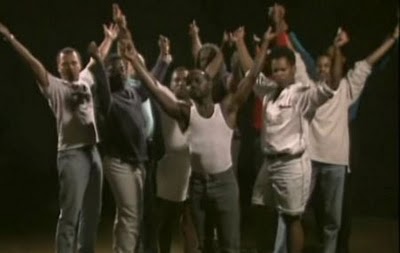
Activist and filmmaker, Marlon Riggs, directed a film in 1989 titled ‘Tongues Untied’; an experimental documentary showcasing multiple men talking about their personal accounts of being gay and black as they are faced with racism and homophobia.
It has been 30 years since the film’s release so it begs the question on whether or not the public sphere has changed today in comparsion to what it was back then. One possible yet objective theory that could answer the question would be Catherine R. Squires’ essay titled ‘Rethinking the Black Public Sphere: An Alternative Vocabulary for Multiple Public Spheres,’ in which she goes into detail of her perspective on the public sphere theory.
In the essay, Squires provides a counter-argument to Habermas’ theory on the public sphere by saying that there are actually two types of publics: A dominent public sphere and a subaltern counter-public. In relation specifically to the Black public sphere, Squires describes the dominent type as white upperclass males whereas the second type is described to be,
“… historically oppressed… “marginal”… groups, such as women and African Americans, that have been excluded from the dominant public sphere by legal or extralegal means.”
pg. 450
As inequality still remains in a long-lasting battle -in both political and societal contexts- to be permenantly ceased, the dominance of the ‘white males’ public sphere also remains in shadowing the counter-public spheres (Race, sex, LGBTQ, etc) through its influence and power over them. But it is this particular quote from Squires that really made me think. In which she states,
“…prevailing social norms may instill fear in citizens of marginalized publics that their ideas would at best be met with indifference, and at worst violence.”
pg. 449
What made this statement interesting to me is the keyword included in it. ‘Fear.’ You may have heard the words “don’t let fear control you” in any form of speech that is mostly used to empower others. Personally, I find that statement ironic as that’s what has always been happening.
When viewing Tongues Untied, listening to every word spoken and watching clips of protest and personal accounts, I couldn’t help but sense fear emitting from them throughout the film. Because these men are not only afraid of the dominent public sphere bringing hatred and violence down upon them, they are afraid of their own counterpublic commiting the exact same thing and so they create their own ‘sub-counterpublic.’ It is quite saddening to think that the influence and power white males have that instills fear and dominance onto black, gay men, is the same type that black, straight men uses as well on their own people.
Imagine your own flesh and blood turning their backs, unable to support you because of your sexual orientation. Realizing that not only you have to fear the dominent force, but you have now fear your own people who should be supportive yet they are doing almost the exact same thing. When the men in Tongues Untied touched upon straight black men being unable to support gay black men, I wasn’t entirely suprised by it. Why?
Because I’ve seen the same thing with straight Asians on gay Asians, straight Americans on gay Americans, and even gay interracial couples faced the same fear. Influence and power that one public sphere has on a counterpublic can spread down onto that public. It is like an endless cycle being repeated over and over again.
So with all of that being said, allow me to answer one of my questions I have asked at the beginning: is the public sphere back then compared to the today any different? and my answer is…. yes.

Despite racism and homophobia still being an issue today, you cannot deny that it is slowly and gradually lessening as time goes on and they even brought attention to related topics such as interracial relationships. Films like Love, Simon, Moonlight, Tangerine, and The Watermalon Woman have all brought more awareness to the racial and LGBTQ communities who struggling to find a place to belong and feel safe in. Though with each generation that brings fear and violence, more and more acceptance is also growing.
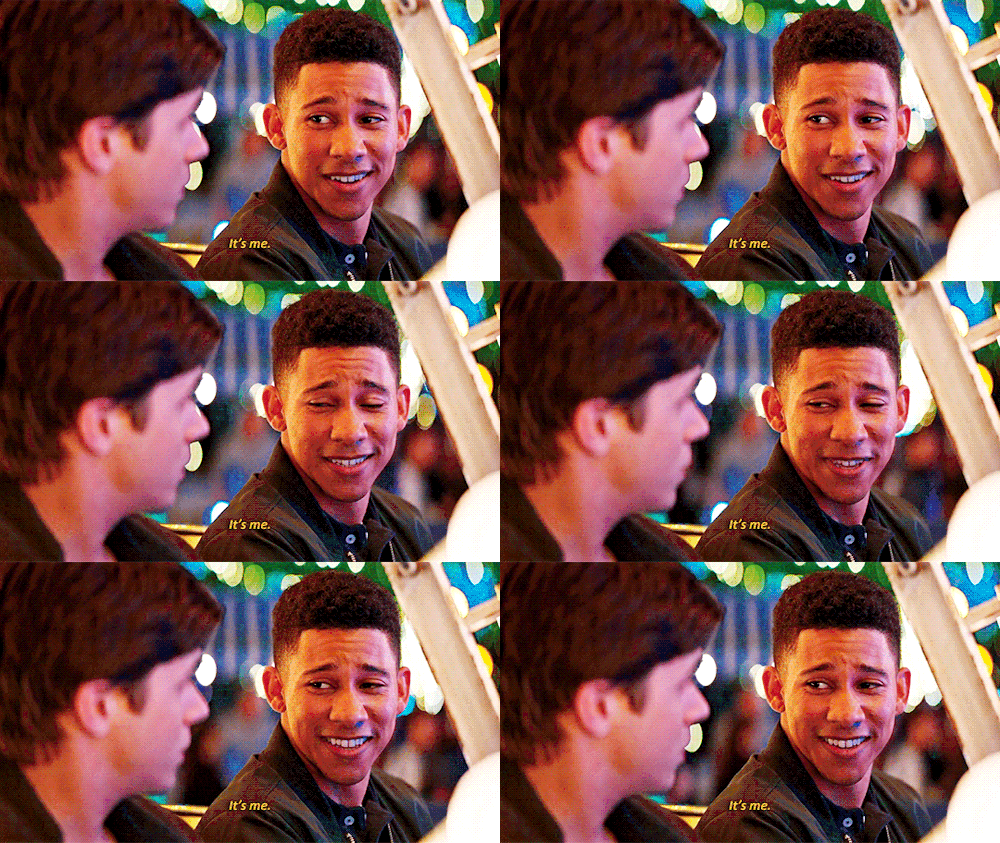
*a film that ends with a Interracial realtionship forming. A topic not often tackled.
Now, am I saying that all this is what Squires is illustrating in her essay? Not at all. There are many things that I may not be able to fully understand. This is simply my own interpretation of what I think it is and that’s okay. Learning and developing what we cannot at first understand is part of being human.
Honestly, I never really minded race or LGBTQ growing up. I just thought that it was already a regular thing in life that isn’t as common. Ever since the LGBT rights that began in 2016 rose and more coverage circulates, I realized that it has been an issue for many years that hasn’t gone away yet. I remember how surprised I was when I read more on the topics.
Ultimately, the public sphere has really changed since thirty years ago and remains to be changing more and more as the years go by. If Marlon Riggs was still around today, much like my reaction, he would proud and happy at how much things have progressed since his film was released. As well as the revolution he’s either helped create or bring more light to that has been going on to create a better future.
Catherine Squires, “Rethinking the Black Public Sphere: An Alternative Vocabulary for Multiple Public Spheres,” Communication Theory 12.4 (Nov 2002): 446-468.
 FILM 3610G - CINEMATIC PUBLICS & PARTICIPATIONS: MOVEMENTS, MANIFESTOS, FILM FESTIVALS, COLLECTIVES